DC Hammer
Preface: Just to alleviate any confusion, those that might think or hope that Democritus is a temple dedicated to denigrating Donald Trump should be aware that that is not the case. Democritus is about looking at what is going on in the world and offering a viewpoint and opinion of movements, large and small, with some historical perspective. As the below explores, some good things can be done by questionable people. —However, as it further explores, there may be a long-term price for doing so...
Could I be the only one who thinks the tariffs-a-go-go have a chance of working? Perhaps it is because I am not looking at the math of it to make sense. But neither, I think, is Donald Trump.
In a rather sad way, first at the knee of his father and then under the mentorship of Roy Cohn, Trump learned all about power: Who has it, who does not and how very few people will sacrifice anything much of value to stand up to it. That understanding has been the locus for his business career. He has used this understanding to bluff, cow, bluster and bully his way through life, knowing that most people, companies or even courts will do little to stop him if he just deploys his two favourite tactics: overwhelming negative response and intransigence/delay.
I believe the tariffs follow that same locus. People are looking for them to make mathematical sense; they won’t find it, because sense is not the point, the point is to send other nations and companies back on their heels where they will make a deal out of bewilderment and weakness. On, off, on again; make a deal to make it stop.
I was on stage last week and, as is the norm, a significant part of my talk was about power and identity — two levers, the interplay of which drive most of human behaviour - including most of the turmoil in the US right now. I explained that the true power of the Apple brand is in the one feature that their competitors cannot replicate or challenge: the Apple logo on the device (and the identity that comes with it). Which means that all the other features that other manufacturers keep trying to gain leverage with have little to zero effect on Apple sales.
I think it is not dissimilar with the tariff situation. Trump wants to show that he is forcing the creation (repatriation) of manufacturing jobs in the US. Countervailing tariffs will have no effect on this feature and may actually accelerate it. Victory will be if a cavalcade of manufacturers pledge to move production inside American borders. (I’m imagining that those promises will soon begin.) And on that front, I am all for it (although let me be clear, I think that this could be achieved without also actively insulting and alienating every friend the US has or had or driving them toward the open arms of China...). Subsequently, the other messy part will be who pays for it all.
It is essentially the beginning of a turnback from the Reagan-era policy of shareholder return being the primary metric, as previously discussed in these pages. But, of course, it has taken 40+ years to get to where we are under that rubric. Undoing that, particularly at warp speed, will be painful. It is a seismic change, with many questions to answer.
1. Will the American jobs pay American wages? (Average manufacturing wages in China are 3.5 – 5X less than the US.)
2. How will “Made in the USA” goods cover that cost? Higher cost = higher inflation. Higher quality = less frequent replacement.
3. How far will the stock market tumble when quarterly stock returns are no longer the primary metric?
- Can billionaires possibly manage to get by as a centi-millionaires?
The truth is, no matter the logic or outcome, the number of people who could have spun the wheel on this 180-degree tanker-as-a-speedboat turn is a very very short list. Donald Trump, maybe Bernie Sanders, I don’t have another… Good or bad (yes, I hear you), Donald Trump is one of a kind.
And here is the rub: to make change on this scale, you need someone with such a strong purpose or ego that they can plough on when they have essentially pissed-off most of the entire world. Getting that and also someone who does not abuse power is the rarest mix of all — and, unfortunately, I cannot think of a historical (or current) example. (Maybe Bernie, if given the chance.)
In the medium term, I think the tariffs may work. The short term, as we are finding out, is painful (and far from over). My concern is the long term. I wonder if in a year or two the US will be like Germany in 1937-38. With a leader who, although reviled by many, and working tirelessly to circumvent - or destroy - the separation of powers on which our nation was built, is seen as driving a resurgent economy, a recovering middle-class and national pride in the US — and, because money, many sins and trampling of rights thus get increasingly overlooked. (And yes, there are many).
Two years later, Germany was at war, because people with Trump’s personality only know how to play zero-sum and those who rely on appeasement do so until their backs are fully against the wall —where the only option left is massive retaliation. People have protests, companies have courts, nations have nukes.
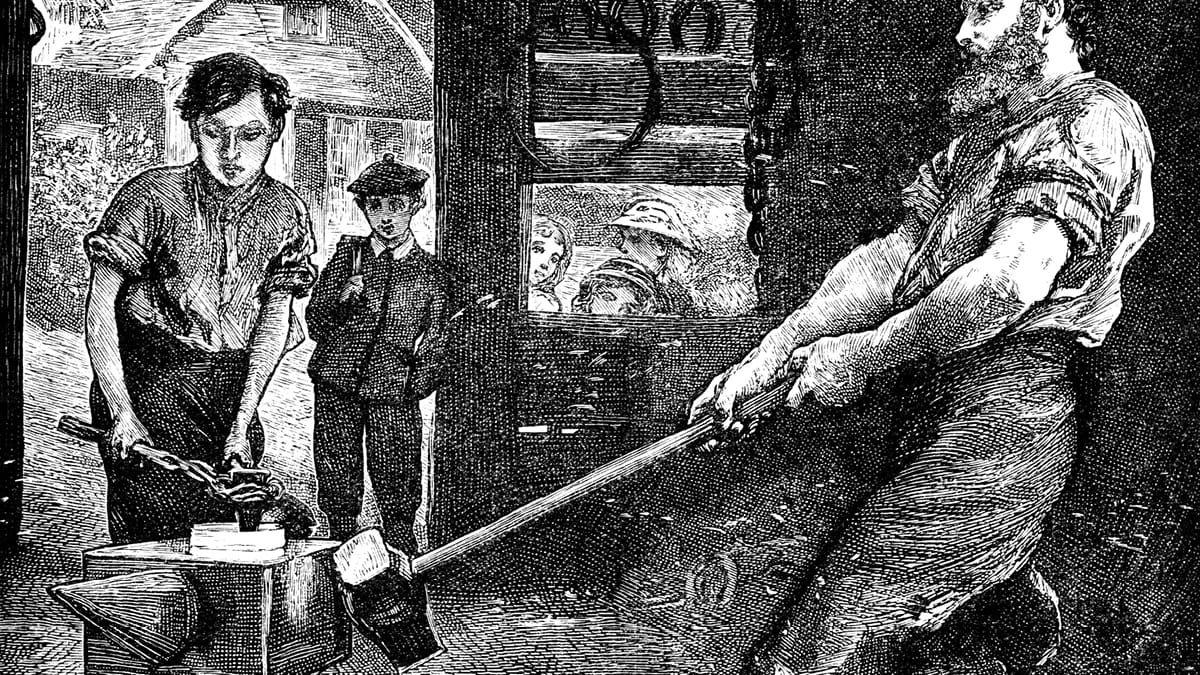
History is being made in a way we have not seen in 70+ years. I believe there is a small window (which would involve unimpeded elections and no third term, hence the small window...) where the US enters a new era of soaring achievement. After all, for example, if the Department of Education was so stellar, why is the US lagging behind all other developed nations in education? Some things needed changing and doing it with a scalpel had run its course (to nowhere). Then the question becomes, when and where will the hammer-swinging end and what is the true end-game of the person swinging it? —And, most importantly, who will be in charge of the reconstruction?
It took devastating war for Germany and Japan to become democratic industrial giants. It took a holocaust for the Jewish people to get their homeland. What price will the U.S. pay for its rebirth?